
Don't Make These common Mistakes on Your Next Paint Display
The Hidden Costs and Oversights That Can Turn a Great Retail Display Into a Headache

Creating a paint display is exciting.
The renderings look incredible. The colors pop. The lighting is perfect. The interactive screen is a showstopper. Everyone nods in approval. Then reality arrives.
The display is too large for half the stores. Installation costs exceed the budget. The monitor needs power that many locations do not have. Replacement parts take weeks to arrive. Store associates struggle to update graphics. The display that looked amazing in the concept phase suddenly becomes an operational challenge.
Sound familiar?
The truth is that successful paint displays are not just designed for the showroom floor. They are designed for the entire lifecycle of the program, from manufacturing and shipping to installation, maintenance, updates, and eventual replacement.
Whether you're developing a custom paint display, showroom fixture, color selection center, or retail merchandising program, here are the mistakes you should avoid before launching your next display.
common Mistake #1:
Designing for the Ideal Store Instead of the Real Store
One of the most common mistakes in retail display design is assuming every store location looks the same. They don't.
Some stores have wide aisles. Others have narrow footprints. Ceiling heights vary. Traffic patterns differ. Existing fixtures create obstacles. What works beautifully in one location may be impossible to install in another.
Many paint display programs are designed around a flagship location rather than the broader retail network.
What to Do Instead
Design for flexibility.
Consider:
Multiple footprint options
Modular retail display components
Adjustable configurations
Adaptable merchandising sections
Flexible graphic placement
A display that can fit 90 percent of locations will outperform a display that only works in the perfect environment.

common Mistake #2:
Overcomplicating the Design
Just because your paint display can include ten messages, three videos, multiple promotions, and a dozen calls to action doesn't mean it should.
One of the biggest retail display mistakes is trying to say everything at once. When shoppers are bombarded with too many graphics, messages, and features, they struggle to understand what matters most.
Remember, customers aren't studying your display. They're looking for quick answers. If they can't immediately understand the value, they'll keep walking.
A great paint display doesn't communicate more. It communicates better.
What to Do Instead
Focus on one primary message or objective.
Create a clear visual hierarchy.
Limit calls to action.
Remove anything that doesn't support the shopper's decision.
Design for clarity, not complexity.
Result: Better engagement, stronger brand recall, and a simpler path to purchase.

common Mistake #3:
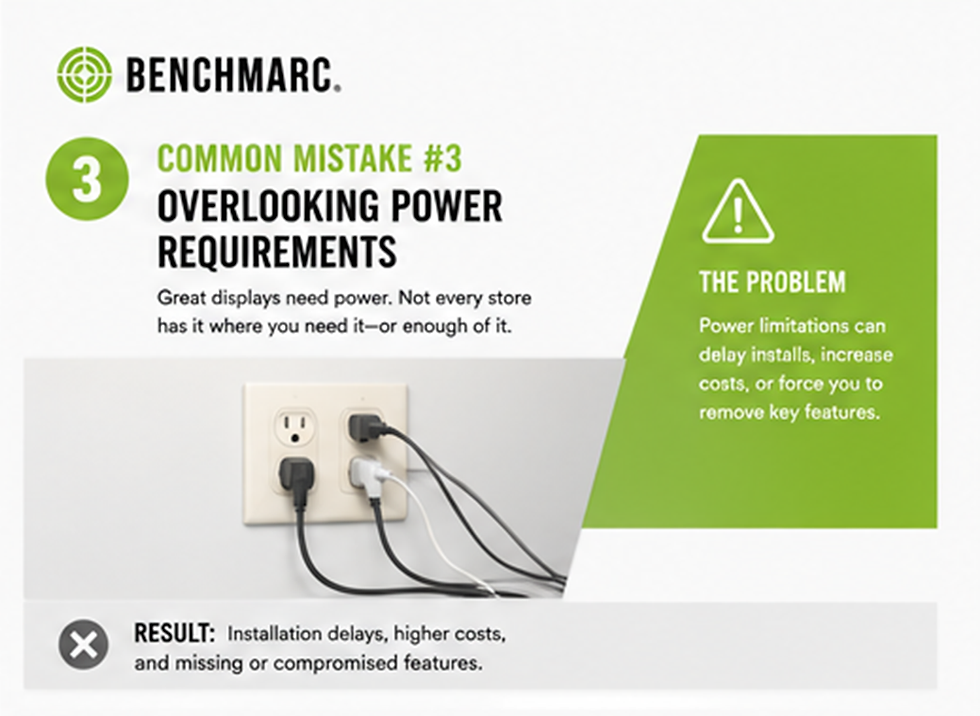
Assuming Every Store Has Power
Interactive screens, LED lighting, digital signage, charging stations, and smart technology can create an engaging customer experience.
They can also create major operational challenges.
Not every paint department has power where you need it. Not every store will approve electrical work. Not every retailer wants cords running across the floor.
What to Do Instead
Evaluate power requirements early.
Consider:
Battery-powered solutions
Low-voltage lighting
Solar-assisted components
Optional electronic upgrades
Displays that function with or without power
The most successful interactive retail displays have a backup plan when power is unavailable.
common Mistake #4:
Forgetting That Someone Has to Ship It
Shipping is often one of the largest hidden costs in a retail display program.
A display may look impressive in a rendering, but oversized dimensions, excessive weight, and complex packaging can dramatically increase freight costs. Multiply those costs across dozens, hundreds, or thousands of stores and the impact becomes significant.
What to Do Instead
Design with logistics in mind from the beginning.
Ask questions like:
Can components ship flat?
Can the fixture nest efficiently?
How many displays fit on a pallet?
How many displays fit in a truckload?
Can packaging reduce damage risk?
Good display design and good supply chain design should work together.

common Mistake #5:
Ignoring Installation Costs
A display that requires specialized labor at every location may look impressive, but the installation budget can quickly spiral out of control.
The reality is simple.
If a display takes four hours to install instead of thirty minutes, someone is paying for that difference. Across a national rollout, installation costs can become larger than expected manufacturing savings.
What to Do Instead
Design for simple deployment.
The best retail displays often feature:
Tool-less assembly
Pre-assembled components
Clear installation instructions
Minimal wiring requirements
Reduced field labor
A display that is easier to install is usually easier to maintain as well.

common Mistake #6:
Overlooking Maintenance Requirements
Retail environments are tough.
Paint displays are touched thousands of times each month. Color chips disappear. Graphics get damaged. Samples fade. Components wear out. Yet many display programs are designed as if they will remain pristine forever.
They won't.
What to Do Instead
Design for maintenance from day one.
Ask:
How easy is it to clean?
How often will components need replacement?
Can store associates maintain it?
Are spare parts readily available?
A display that looks great on day one should also look great on day 1,000.

Key Takeaways
Before approving your next paint display program, ask these questions:
Will it fit different store layouts?
Have shipping costs been optimized?
Is installation simple and cost-effective?
Does it require power, and is power available?
How will the display be maintained?
What happens when components get damaged?
Can graphics and messaging be updated easily?
Is inventory replenishment built into the design?
Will the display still perform well three years from now?
The best paint displays are not simply designed for launch day.
They are designed for long-term success.
---------------------------------------------------------------------------------------------------------------
Ready to Build a Smarter Paint Display?
At Benchmarc, we help paint brands create custom retail displays that look great in renderings and perform in the real world. From design engineering and manufacturing to logistics, installation, inventory management, and field updates, we develop paint display programs that are built for the entire lifecycle.
If you're planning a new paint display, color center, showroom fixture, or retail merchandising program, let's talk before small oversights become expensive problems.



Comments